
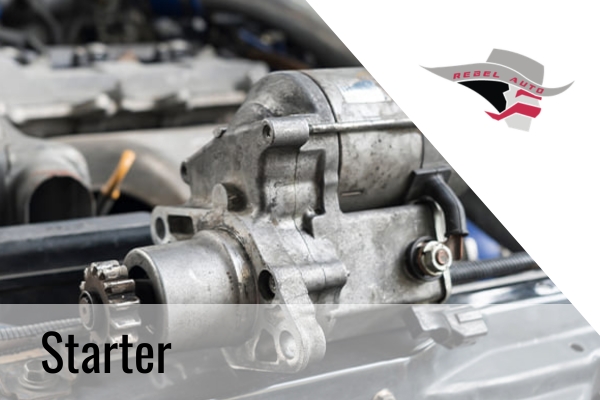
The starter is the small motor that turns your engine over when you turn the key or press the start button. It runs on battery power and works each time you start the car. So, what is the most common cause of starter failure, and how can you tell yours is going bad?
What Is the Most Common Cause of Starter Failure? Wear is behind most starter failures, but a few other problems can look just like a bad starter.
- Worn Internal Parts: Worn brushes, bearings and gears are the most common reason a starter fails. The car might start fine one morning and only click the next.
- A Weak or Dead Battery: Sometimes the starter isn't the problem at all. A low battery can't send enough power, so the engine cranks slowly or you only hear a click.
- Loose or Corroded Connections: White or green crust on the battery terminals can block power. So can a loose cable. Cleaning the terminals and tightening the clamps may get the car starting again.
- Bad Solenoid: The solenoid is the switch that sends battery power to the starter motor, and when it fails, you'll usually hear a single click and nothing more.
- Heat Damage: Years of exhaust heat can make the wiring on nearby starters brittle.
- Worn Starter Gear: Grinding is the giveaway here. A chipped starter gear doesn't fit cleanly against the flywheel, the toothed ring it spins to start the engine. If the flywheel's teeth are damaged too, both parts may need replacing.
What Are the Signs of a Bad Starter? Watch for:
- A click but no cranking
- Grinding when starting
- A car that starts some days but not others
- Slow or uneven cranking
- Lights that work while the engine won't crank
These signs don't always mean the starter is bad. A weak battery, loose cable or problems with alternators can cause similar trouble.
How Can You Tell If the Starter or Alternator Is Bad?
The two parts have different jobs. The starter gets the engine going. Alternators work while the engine is running and help recharge the battery.
If the engine won't turn over, the starter, battery or cables could be involved. If the car starts but the battery keeps losing its charge, the alternator may need attention.
Can a Bad Battery Damage the Starter?
A weak battery doesn't mean the starter has failed. However, cranking the engine over and over on a low battery makes the starter work harder and can overheat it. If the car won't start after a few tries, stop and have the battery and starter tested.
When Should You Replace a Starter?
Not every starting problem calls for a new starter. Replace it when testing confirms it has failed or it's no longer dependable.
Get Your Starting System Checked
Starter trouble can eventually leave you with a car that won't start. Getting recurring problems checked early can show whether the starter is worn out or another part is causing the trouble.
A proper check can separate starter trouble from battery problems, bad connections or charging issues. You can then repair the part that's actually causing the problem instead of replacing parts unnecessarily.
Want to know more about what is the most common cause of starter failure? Call our ASE Certified technicians at Rebel Automotive for more information about alternators and to request an appointment. Our auto repair shop proudly serves residents in the communities of Henderson, NV, Las Vegas, NV, and North Las Vegas, NV.
The starter is the small motor that turns your engine over when you turn the key or press the start button. It runs on battery power and works each time you start the car. So, what is the most common cause of starter failure, and how can you tell yours is going bad?
What Is the Most Common Cause of Starter Failure? Wear is behind most starter failures, but a few other problems can look just like a bad starter.
- Worn Internal Parts: Worn brushes, bearings and gears are the most common reason a starter fails. The car might start fine one morning and only click the next.
- A Weak or Dead Battery: Sometimes the starter isn't the problem at all. A low battery can't send enough power, so the engine cranks slowly or you only hear a click.
- Loose or Corroded Connections: White or green crust on the battery terminals can block power. So can a loose cable. Cleaning the terminals and tightening the clamps may get the car starting again.
- Bad Solenoid: The solenoid is the switch that sends battery power to the starter motor, and when it fails, you'll usually hear a single click and nothing more.
- Heat Damage: Years of exhaust heat can make the wiring on nearby starters brittle.
- Worn Starter Gear: Grinding is the giveaway here. A chipped starter gear doesn't fit cleanly against the flywheel, the toothed ring it spins to start the engine. If the flywheel's teeth are damaged too, both parts may need replacing.
What Are the Signs of a Bad Starter? Watch for:
- A click but no cranking
- Grinding when starting
- A car that starts some days but not others
- Slow or uneven cranking
- Lights that work while the engine won't crank
These signs don't always mean the starter is bad. A weak battery, loose cable or problems with alternators can cause similar trouble.
How Can You Tell If the Starter or Alternator Is Bad?
The two parts have different jobs. The starter gets the engine going. Alternators work while the engine is running and help recharge the battery.
If the engine won't turn over, the starter, battery or cables could be involved. If the car starts but the battery keeps losing its charge, the alternator may need attention.
Can a Bad Battery Damage the Starter?
A weak battery doesn't mean the starter has failed. However, cranking the engine over and over on a low battery makes the starter work harder and can overheat it. If the car won't start after a few tries, stop and have the battery and starter tested.
When Should You Replace a Starter?
Not every starting problem calls for a new starter. Replace it when testing confirms it has failed or it's no longer dependable.
Get Your Starting System Checked
Starter trouble can eventually leave you with a car that won't start. Getting recurring problems checked early can show whether the starter is worn out or another part is causing the trouble.
A proper check can separate starter trouble from battery problems, bad connections or charging issues. You can then repair the part that's actually causing the problem instead of replacing parts unnecessarily.
Want to know more about what is the most common cause of starter failure? Call our ASE Certified technicians at Rebel Automotive for more information about alternators and to request an appointment. Our auto repair shop proudly serves residents in the communities of Henderson, NV, Las Vegas, NV, and North Las Vegas, NV.