What is the most common cause of brake failure?
Worn brake parts are behind most brake failures. Brake pads are the usual culprit. They thin out over time, and once the friction material is gone, stopping takes longer. Let them go too far and you're looking at damaged rotors and a bigger repair bill.
So what is the most common cause of brake failure? Here's what commonly goes wrong:
- Brake pads wear out. This happens to every car eventually. You might hear squealing first. Grinding means the pad is already down to metal.
- Brake fluid gets low or dirty. A low level often points to a leak somewhere. Old fluid doesn't move through the system the way it should, and that hurts braking.
- Rotors wear unevenly. The surface can get rough or too thin. You'll feel it through the pedal or the steering wheel when you slow down.
- Brake lines or hoses leak. When fluid escapes, pressure drops. The pedal might feel soft or sink lower than normal.
- Calipers stick. A stuck caliper can't press the pad against the rotor properly. Sometimes it won't let go after you brake.
- Inspections get skipped. Small problems stay small only if someone catches them. Periodic brake service gives worn or damaged parts a chance to be found early.
Other warning signs include pulling to one side, reduced stopping response, and a brake warning light on the dashboard. Any of these symptoms mean you should have a mechanic check your brakes. Prompt repairs can also keep one damaged component from causing problems elsewhere in the system.
Bottom line: If you are asking what is the most common cause of brake failure, worn components are a key concern. Regular brake service helps maintain dependable stopping performance, while replacing damaged parts on time may prevent larger and more expensive repairs.
Question about what is the most common cause of brake failure? Call our ASE Certified technicians at Rebel Automotive for more information about brake service and to request an appointment. Our auto repair shop proudly serves residents in the communities of Henderson, NV, Las Vegas, NV, and North Las Vegas, NV.
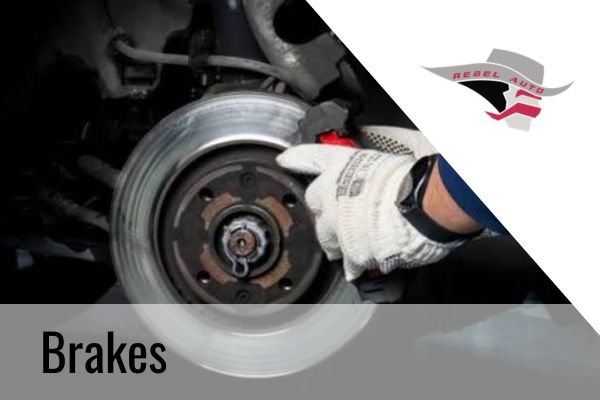
Worn brake parts are behind most brake failures. Brake pads are the usual culprit. They thin out over time, and once the friction material is gone, stopping takes longer. Let them go too far and you're looking at damaged rotors and a bigger repair bill.
So what is the most common cause of brake failure? Here's what commonly goes wrong:
- Brake pads wear out. This happens to every car eventually. You might hear squealing first. Grinding means the pad is already down to metal.
- Brake fluid gets low or dirty. A low level often points to a leak somewhere. Old fluid doesn't move through the system the way it should, and that hurts braking.
- Rotors wear unevenly. The surface can get rough or too thin. You'll feel it through the pedal or the steering wheel when you slow down.
- Brake lines or hoses leak. When fluid escapes, pressure drops. The pedal might feel soft or sink lower than normal.
- Calipers stick. A stuck caliper can't press the pad against the rotor properly. Sometimes it won't let go after you brake.
- Inspections get skipped. Small problems stay small only if someone catches them. Periodic brake service gives worn or damaged parts a chance to be found early.
Other warning signs include pulling to one side, reduced stopping response, and a brake warning light on the dashboard. Any of these symptoms mean you should have a mechanic check your brakes. Prompt repairs can also keep one damaged component from causing problems elsewhere in the system.
Bottom line: If you are asking what is the most common cause of brake failure, worn components are a key concern. Regular brake service helps maintain dependable stopping performance, while replacing damaged parts on time may prevent larger and more expensive repairs.
Question about what is the most common cause of brake failure? Call our ASE Certified technicians at Rebel Automotive for more information about brake service and to request an appointment. Our auto repair shop proudly serves residents in the communities of Henderson, NV, Las Vegas, NV, and North Las Vegas, NV.